
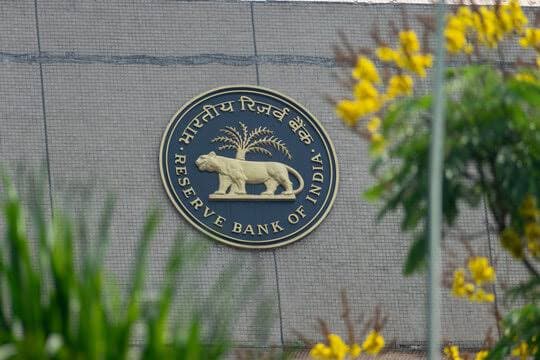
New Delhi: In response to the increasing inflation rates, increasing crude oil prices, and weakness in the rupee, the Reserve Bank of India (RBI) has hiked the repo rate by 25 basis points to 5.5%, which is the first hike in the past four years since February 2019.
The six-member Monetary Policy Committee (MPC) of the RBI unanimously agreed upon raising the rates. RBI also decided to switch the policy stance from ‘neutral’ to ‘calibrated tightening,’ implying that further rate cuts are highly unlikely in the near future.
“Rate cuts are off the table in the near term and policy action ahead can either be a rate hike or a pause,” the governor of the RBI Sanjay Malhotra announced the decision.
The inflation outlook was revised upwards in the current fiscal year, i.e., 2026-27, to 5.2%. According to projections, inflation would be 6% in Q3 and 5.7% in Q4. Consumer price index increased to 4.82% in August, while core inflation climbed to 4.2%.
The risk factors for the rising inflation included rising food and fuel prices, lower monsoon rainfalls, El Niño conditions, and volatility in global oil markets. The price of the Indian crude oil basket increased to USD 116.1 per USD 85 in September versus USD 82 in July.
Despite worries about inflation, the RBI has revised upwards its growth outlook for FY26-FY27 by 40 basis points to 7.1 percent, after growing 7.8 percent in Q1.
According to the RBI, manufacturing activity, services sector activity, credit growth and consumption were still positive; however, it highlighted the risks from geo-political conflicts, trade disputes, and tight global financial conditions.
The change in monetary policy to calibrated tightening has made the RBI’s next move either of a pause or a rate hike.